Showing posts with label Amazing. Show all posts

Sunday, August 7, 2011

Dolphin birth: Amazing photos


A dolphin born in an aquarium in the Netherlands is to be named by the public.

As these amazing photos show his mother Finagain gave birth in her pool in the Harderwijk Dolfinarium on the 22nd May.

Finagain, a common bottlenose dolphin, was herself born in captivity to Notchfin and Guy in 1992.

Her pregnancy lasted twelve months, and the as-yet unnamed calf is around 3ft long at birth, already fully capable of swimming. Unlike human babies dolphin calves are born “breech”, i.e. tail first.

It will live with its mother until it is six. Male dolphins become sexually mature around age nine to thirteen.

The Dolfinarium is home to sixteen dolphins and six harbour porpoise. As well as hosting dolphin displays it acts as a rehabilitation centre, taking in beached or injured cetaceans and preparing them for life back in the wild.

It was first opened in 1965 by Frits den Herder and his brother Coen. During its chequered history the park went bankrupt after an ill-advised expansion into other European countries.

Only a state intervention by the Dutch government restored it to the not-for-profit animal rehabilitation centre it is today.

Most Amazing 9 Information Overlooked Mysteries in History


9. Lost City of Heike

Lost City of HeikeIn the late 2nd century AD, the Greek writer Pausanias wrote an account of how (4-500 years earlier?) in one night a powerful earthquake destroyed the great city of Helike, with a Tsunami washing away what remained of the once-flourishing metropolis. The city, capital of the Achaean League, was a worship centre devoted to the ancient god Poseidon, god of the sea. There was no trace of the legendary society mentioned outside of the ancient Greek writings until 1861, when an archeologist found some loot thought to have come from Helike - a bronze coin with the unmistakable head of Poseidon. In 2001, a pair of archeologists managed to locate the ruins of Helike beneath the mud and gravel of the coast, and are currently trying to peice together the rise and sudden fall of what has been called the “real” Atlantis.

8. The Bog Bodies

The Bog BodiesThis mystery may even be a problem for those legendary investigators from CSI and the like! The bog bodies are hundreds of ancient corpses found buried around the northern bogs and wetlands of Northern Europe. These bodies are remarkably well preserved, some dating back 2,000 years. Many of these bodies have tell-tale signs of torture and other medieval “fun”, which have made some researchers postulating that these unfortunate victims were the result of ritual sacrifices.

7. Fall of the Minoans

Fall of the MinoansThe Minoans are best known for the legend of Theseus and the Minotaur, but it is in fact the demise of this once-great civilisation that is more interesting. While many historians concentrate on the fall of the Roman Empire, the fall of the Minoans, who resided on the island of Crete, is an equal, if not greater mystery. Three and a half thousand years ago the island was shaken by a huge volcanic eruption on the neighbouring Thera Island. Archeologists unearthed tablets which have shown that the Minoans carried on for another 50 years after the eruption, before finally folding. Theories of what finally ended them have ranged from volcanic ash covering the island and devastating harvests to the weakened society eventually getting taken over by invading Greeks

6. The Carnac Stones

The Carnac StonesEveryone has heard of Stonehenge, but few know the Carnac Stones. These are 3,000 megalithic stones arranged in perfect lines over a distance of 12 kilometers on the coast of Brittany in the North-West of France. Mythology surrounding the stones says that each stone is a soldier in a Roman legion that Merlin the Wizard turned in to stone. Scientific attempts at an explanation suggests that the stones are most likely an elaborate earthquake detector. The identity of the Neolithic people who built them is unknown.

5. Who Was Robin Hood ?

The historical search for the legendary thief Robin Hood has turned up masses of possible names. One candidate includes the Yorkshire fugitive Robert Hod, also known as Hobbehod or Robert Hood of Wakefield..

The large number of suspects is complicated further as the name Robin Hood became a common term for an outlaw. As literature began to add new characters to the tale such as Prince John and Richard the Lionheart the trail became more obscure. To this day no one knows who this criminal really was.

4. The Lost Roman Legion

The Lost Roman LegionAfter the Parthians defeated underachieving Roman General Crassus’ army, legend has it that a small band of the POWs wandered through the desert and were eventually rounded up by the Han military 17 years later.

First century Chinese historian Ban Gu wrote an account of a confrontation with a strange army of about a hundred men fighting in a “fish-scale formation” unique to Roman forces.

An Oxford historian who compared ancient records claims that the lost roman legion founded a small town near the Gobi desert named Liqian, which in Chinese translates to Rome. DNA tests are being conducted to answer that claim and hopefully explain some of the residents’ green eyes, blonde hair, and fondness of bullfighting.

3. The Voynich Manuscript

The Voynich ManuscriptThe Voynich Manuscript is a medieval document written in an unknown script and in an unknown language. For over one hundred years people have tried to break the code to no avail. The overall impression given by the surviving leaves of the manuscript suggests that it was meant to serve as a pharmacopoeia or to address topics in medieval or early modern medicine. However, the puzzling details of illustrations have fueled many theories about the book’s origins, the contents of its text, and the purpose for which it was intended. The document contains illustrations that suggest the book is in six parts: Herbal, Astronomical, Biological, Cosmological, Pharmaceutical, and recipes.

2. The Tarim Mummies

The Tarim MummiesAn amazing discovery of 2,000 year old mummies in the Tarim basin of Western China occurred in the early 90s. But more amazing than the discovery itself was the astonishing fact that the mummies were blond haired and long nosed.

In 1993, Victor Mayer a college professor collected DNA from the mummies and his tests verified that the bodies were all of European genetic stock.

Ancient Chinese texts from as early as the first millennium BC do mention groups of far-east dwelling caucasian people referred to as the Bai, Yeuzhi, and Tocharians. None, though, fully reveal how or why these people ended up there.

1. Disappearance of the Indus Valley Civilization

Disappearance of the Indus Valley CivilizationThe ancient Indus Valley people, India’s oldest known civilization had a culture that stretched from Western India to Afghanistan and a populace of over 5 million. le—India’s oldest known civilization— were an impressive and apparently sanitary bronze-age bunch.

The scale of their baffling and abrupt collapse rivals that of the great Mayan decline. They were a hygienically advanced culture with a highly sophisticated sewage drainage system, and immaculately constructed baths.

There is to date no archaeological evidence of armies, slaves, conflicts, or other aspects of ancient societies. No one knows where this civilization went.

Remote Village In India GENIUS Boy Amazing IQ Level

A year ago a footage emerged from a remote village in India. The video showed a young girl receiving surgery to separate her fingers, which were badly burned and fused together. Why did this operation make headlines around the world? The surgery was performed by a 7-year-old boy named Akrit Jaswal.

Akrit JaswalNow 13 years old, Akrit has an IQ of 146 and is considered the smartest person his age in India - a country of more than a billion people. Before Akrit could even speak, his parents say they knew he was special.

'He learned very fast,' says Raksha, Akrit's mother. 'After learning the alphabet, we started to teach him joining of words, and he started writing as well. He was two.'

At an age when most children are learning their ABCs, Akrit was reading Shakespeare and assembling a library of medical textbooks. When he was 5 years old, he enrolled in school. One year later, Akrit was teaching English and math classes.

Akrit developed a passion for science and anatomy at an early age. Doctors at local hospitals took notice and started allowing him to observe surgeries when he was 6 years old. Inspired by what he saw, Akrit read everything he could on the topic. When an impoverished family heard about his amazing abilities, they asked if he would operate on their daughter for free. Her surgery was a success.

After the surgery, Akrit was hailed as a medical genius in India . Neighbors and strangers flocked to him for advice and treatment. At age 11, Akrit was admitted to Punjab University .. He's the youngest student ever to attend an Indian university. That same year, he was also invited to London 's famed Imperial College to exchange ideas with scientists on the cutting edge of medical research.

Akrit JaswalAkrit says he has millions of medical ideas, but he's currently focused on developing a cure for cancer. 'I've developed a concept called oral gene therapy on the basis of my research and my theories,' he says. 'I'm quite dedicated towards working on this mechanism.'

Growing up, Akrit says he used to see cancer patients lying on the side of the road because they couldn't afford treatment or hospitals had no space for them. Now, he wants to use his intellect to ease their suffering. '[I've been] going to hospitals since the age of 6, so I have seen firsthand people suffering from pain,' he says. 'I get very sad, and so that's the main motive of my passion about medicine, my passion about cancer.'

Currently, Akrit is working toward a bachelor's degrees in zoology, botany and chemistry. Someday, he hopes to continue his studies at Harvard University.

Amazing Babies born 8/8/08 at 8:08; 8 lbs., 8 oz


Two lucky newborns inspire hospital workers to buy lottery tickets

Babies born 8/8/08 at 8:08; 8 lbs., 8 oz
Xander Riniker, surrounded by sister Chloe Shumacher, 11, and father Chad Riniker, was born at 8:08 a.m. on August 8, 2008 and weighs 8 pounds, 8 ounces.

Meet Hailey Jo Hauer and Xander Jace Riniker, both born at 8:08 a.m. on 8/8/08, weighing 8 pounds, 8 ounces, in neighboring states.

Xander, born at St. Luke’s Hospital in Cedar Rapids, Iowa, is the eighth grandchild for his mother’s parents. And he’s not the only one in his family with an unusual birthday: His 2-year-old brother, Kael, was born on 4/5/06.

Lindsey Hauer thought staff at Lake Region Hospital in Minnesota were joking when they told her the time of her daughter’s birth. And then she got a call from the birthing suite noting Hailey’s weight.

Nurse Jenny Harstad joked that she tried to shrink the baby to 18 inches from her actual 19.5 inches.

Several hospital staff members in Minnesota pledged to buy lottery tickets. And Chad Riniker, Xander’s father, said that eight hadn’t been his lucky number before, but that now he was thinking about buying a lottery ticket.

“I just might,” he said. “If nothing else, with four children I should probably play the lottery.”

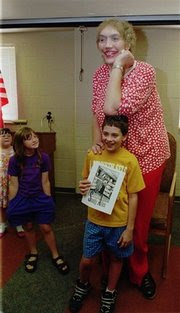
Amazing World's tallest woman dies in Indiana at age 53


World's Tallest WomanA woman who grew to be 7 feet, 7 inches tall and was recognized as the world's tallest female died Wednesday, a friend said. She was 53.

Sandy Allen, who used her height to inspire schoolchildren to accept those who are different, died at a nursing home in her hometown of Shelbyville, family friend Rita Rose said.

The cause of death was not yet known. Allen had been hospitalized in recent months as she suffered from a recurring blood infection, along with diabetes, breathing troubles and kidney failure, Rose said.

In London, Guinness World Records spokesman Damian Field confirmed Wednesday that Allen was still listed as the tallest woman. Some Web sites cite a 7-foot-9 woman from China.

Coincidentally, Allen lived in the same nursing home, Heritage House Convalescent Center, as 115-year-old Edna Parker, whom Guinness has recognized as the world's oldest person since August 2007.

Allen said a tumor caused her pituitary gland to produce too much growth hormone. She underwent an operation in 1977 to stop further growth.

But she was proud of her height, Rose said. "She embraced it," she said. "She used it as a tool to educate people."

Allen appeared on television shows and spoke to church and school groups to bring youngsters her message that it was all right to be different.

After Allen was listed by Guinness as the world's tallest woman, she won a role in Federico Fellini's 1976 film "Casanova," appearing as "Angelina the Giantess." She was featured in the 1981 Canadian documentary "Being Different." She also appeared in a TV movie called "Side Show" in 1981.

Indiana Gov. Mitch Daniels said he met Allen twice. "Then, and from a distance, I admired very much the way she handled a uniquely difficult situation with uncomplaining grace," he said.

Allen weighed 6-1/2 pounds when she was born in June 1955. By the age of 10 she had grown to be 6-foot-3, and by age 16 she was 7-1. She wrote to Guinness World Records in 1974, saying she would like to get to know someone her own height.

"It is needless to say my social life is practically nil and perhaps the publicity from your book may brighten my life," she wrote. The recognition as the world's tallest woman helped Allen accept her height and become less shy, Rose said.

"It kind of brought her out of her shell," Rose said. "She got to the point where she could joke about it." In the 1980s, she appeared for several years at the Guinness Museum of World Records in Niagara Falls, Ontario.

"I'll never forget the old Japanese man who couldn't speak English, so he decided to feel for himself if I was real," she recalled with a chuckle when she moved back to Indiana in 1987. "At Guinness there were days when I felt like I was doing a freak show," she said. "When that feeling came too often, I knew I had to come back home."

Difficulty with mobility had forced Allen to curtail her public speaking in recent years, Rose said. She had suffered from diabetes and other ailments and used a wheelchair to get around.

A scholarship fund has been set up in Allen's name through the Blue River Community Foundation, Rose said, with proceeds going to Shelbyville High School.

"She loved talking to kids because they would ask more honest questions," Rose said. "Adults would kind of stand back and stare and not know how to approach her."

Source: Yahoo.com